

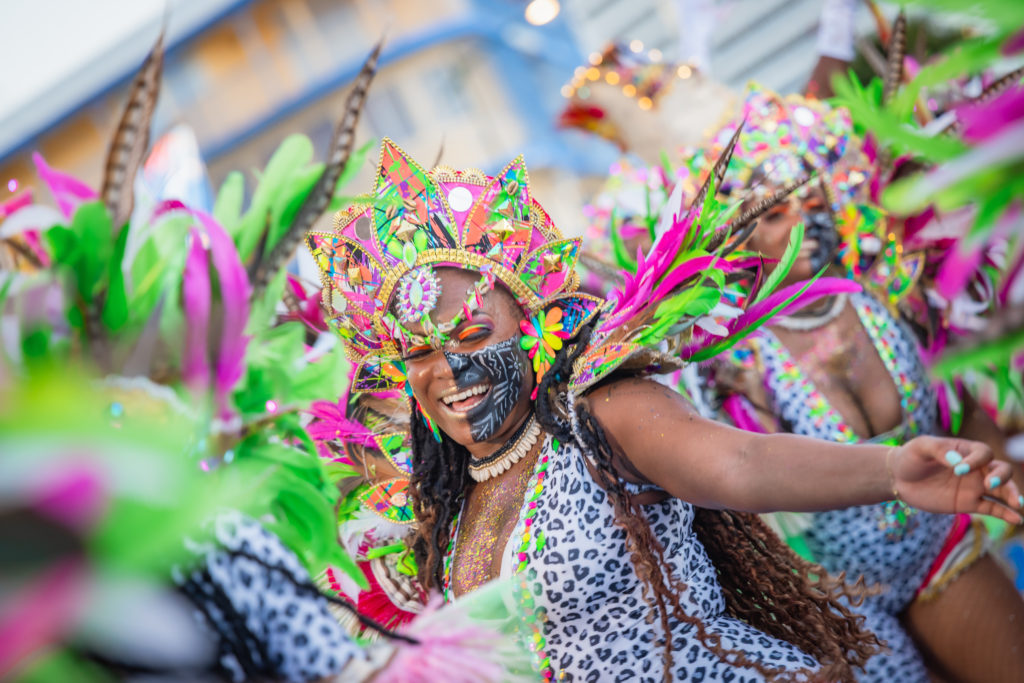
Beyond its beaches and natural landscapes, Guadeloupe Islands stands out for its rich cultural heritage. Carnival is one of its most iconic expressions. For travel agents and tour operators, this event is a strong selling point for travelers seeking immersive cultural experiences.
A season that makes travel planning easier
From January through Ash Wednesday, the festivities span several weeks. This extended season offers greater flexibility when designing travel packages, allowing travelers to enjoy the Carnival atmosphere without necessarily being there during the final days of festivities.
A variety of Carnival groups and atmospheres
Carnival in the Guadeloupe Islands stands out for the diversity of its Carnival groups. Traditional skin-drum groups (groupes à po) favor traditional percussion, snare drum groups (groupes à caisses claires) stand out for their choreography and elaborate costumes, masquerade groups (groupes à mas) parade to the sound of steelpan, while synthesizer groups (groupes à synthé) offer a more modern musical atmosphere.
This diversity allows visitors to discover different expressions of Guadeloupean Carnival during a single stay.
Experiences beyond the parades
The Carnival season also features a wide range of activities, including Carnival parties, costume contests, exhibitions, workshops, and cultural events. These are all opportunities to meet local residents and discover the skills and craftsmanship associated with this tradition.
Reflecting Guadeloupe’s history and cultural identity, Carnival is much more than a festive event. It provides a space for artistic, cultural, and popular expression that brings generations together.
An opportunity to enrich your tourism offerings
Incorporating Carnival into a sightseeing itinerary, offering a themed stay focused on Creole culture, or simply including a parade in a vacation itinerary allows you to diversify the experiences offered to your clients.
Tourism professionals are, however, encouraged to book accommodations, flights, and rental vehicles well in advance, particularly during the final days of Carnival, and to adapt their itineraries to traffic restrictions associated with the festivities.